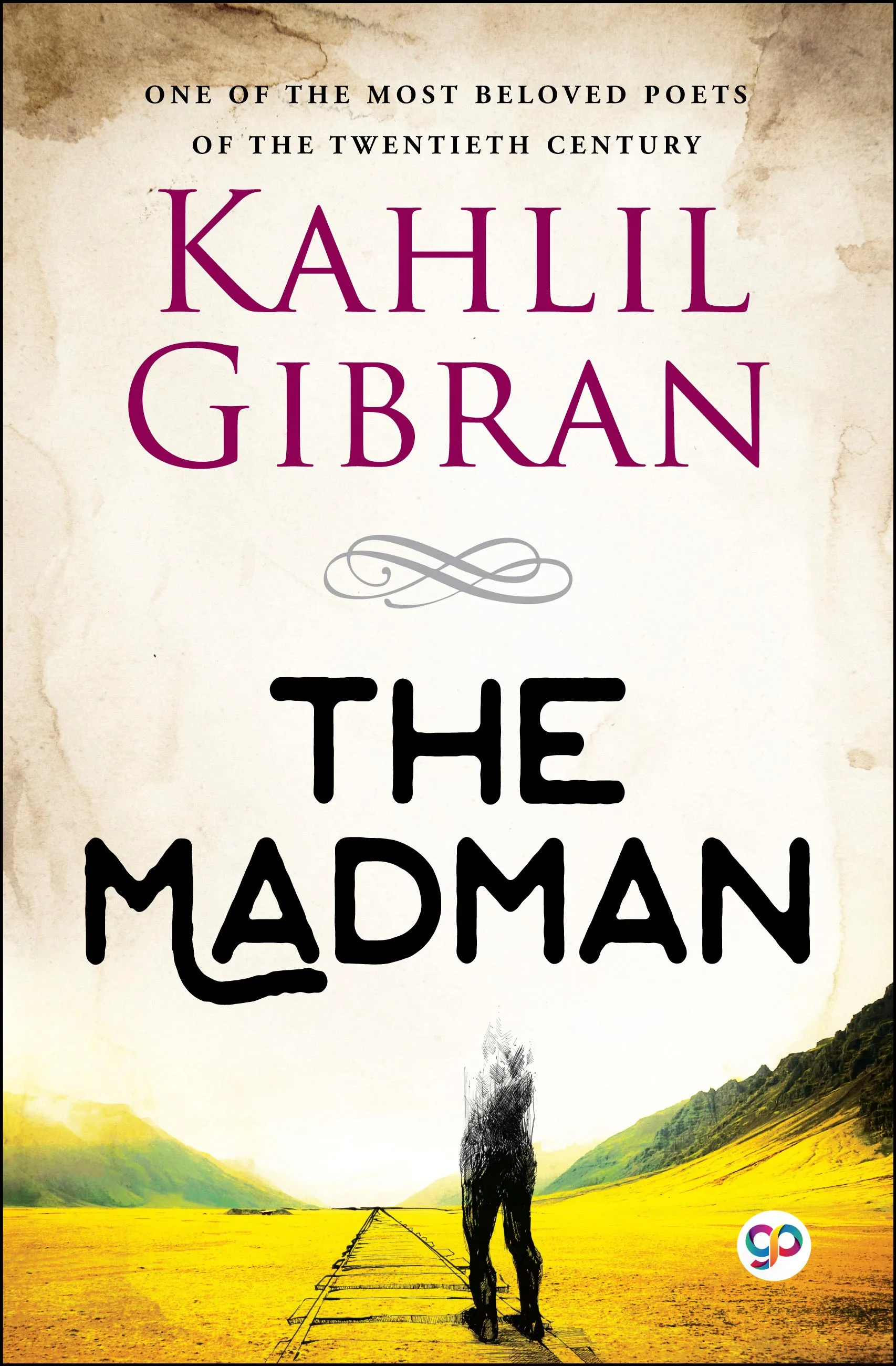
The Madman
eBook
• INR 99.00
• English
• 9789354992490
No ratings yet
| Publisher | General Press |
|---|---|
| ISBN13 | 9789354992490 |
| ASIN/SKU | B0B6FPFWVL |
| Book Format | eBook |
| Language | English |
| List Price | INR 99.00 |
| Subject Code | POE013000, FIC111020 |
| Publishing Date | 06/07/2022 |
| Book Code | BD00069261 |
Buy this Book
Amazon Stores
Ebook Stores
Other Stores
Discover The Madman by Kahlil Gibran. This book is published by General Press in eBook format, ISBN 9789354992490, ASIN B0B6FPFWVL, under Literature and Fiction, Poetry.
Book Description
‘The Madman,’ originally published in 1918, is a thought-provoking collection of aphoristic parables and poetry that explores the desires and motivations of humankind by Kahlil Gibran, widely known in America as the author of ‘The Prophet’, which sold more copies in the 20th century than any other book but the Bible, the great Lebanese-American poet and artist. He first became known to Americans in 1918 with the publication of ‘The Madman’.
Thought-provoking and inspiring, the book is a collection of memorable, life-affirming parables and poems, many of them casting an ironic light on the beliefs, aspirations, and vanities of humankind—and many reminiscent of the work of Tagore and Nietzsche, both of whom were strong influences on Gibran.
Among the 35 poems and parables in this volume are: “How I Became a Madman,” “The Two Hermits,” “The Wise Dog,” “The Good God and the Evil God,” “Night and the Madman,” “The Three Ants,” “When My Sorrow Was Born,” “And When My Joy Was Born,” and many more.
Thought-provoking and inspiring, the book is a collection of memorable, life-affirming parables and poems, many of them casting an ironic light on the beliefs, aspirations, and vanities of humankind—and many reminiscent of the work of Tagore and Nietzsche, both of whom were strong influences on Gibran.
Among the 35 poems and parables in this volume are: “How I Became a Madman,” “The Two Hermits,” “The Wise Dog,” “The Good God and the Evil God,” “Night and the Madman,” “The Three Ants,” “When My Sorrow Was Born,” “And When My Joy Was Born,” and many more.
Author Biography
Born in 1883 in the mountainous village of Bsharri in modern-day Lebanon, then part of the Ottoman Empire, Kahlil Gibran experienced a childhood marked by poverty and a lack of formal education. Seeking a better life, his mother immigrated to the United States in 1895, settling the family in the South End of Boston. It was there that Gibran's innate artistic talents were first recognized by a progressive settlement house, introducing the young immigrant to the local avant-garde art scene and setting him on a lifelong creative path.
To preserve his cultural heritage, Gibran returned to Lebanon in 1898 for several years of formal schooling. He traveled back to Boston in 1902 amidst a series of severe family tragedies, losing a brother, a sister, and his mother to illness in rapid succession. Despite his profound grief, he began to establish himself as both a painter and an Arabic-language writer. His trajectory shifted significantly when he met Mary Haskell, a school headmistress who became his lifelong benefactor, funding his art studies in Paris and heavily editing his later English writings.
Relocating to New York City in 1911, Gibran immersed himself in the local literary community and began to transition from writing exclusively in Arabic to publishing in English. His unique synthesis of Eastern mysticism, romanticism, and Western literary styles culminated in his 1923 masterpiece, The Prophet. This brief but deeply moving collection of poetic essays, exploring universal human themes such as love, joy, sorrow, and work, resonated profoundly with readers. Although it initially received a lukewarm reception from critics, it quickly found massive word-of-mouth success.
Over the following decades, The Prophet achieved phenomenal international popularity, cementing Gibran as one of the best-selling poets in history. He spent his final years continuing to write and paint, though he struggled with declining health and severe alcoholism. Gibran died in New York in 1931 at the age of forty-eight from cirrhosis of the liver and tuberculosis. Fulfilling his final wishes, his remains were returned to his hometown in Lebanon, where he is celebrated as a national hero and an enduring symbol of spiritual and literary bridge-building between the East and West.
To preserve his cultural heritage, Gibran returned to Lebanon in 1898 for several years of formal schooling. He traveled back to Boston in 1902 amidst a series of severe family tragedies, losing a brother, a sister, and his mother to illness in rapid succession. Despite his profound grief, he began to establish himself as both a painter and an Arabic-language writer. His trajectory shifted significantly when he met Mary Haskell, a school headmistress who became his lifelong benefactor, funding his art studies in Paris and heavily editing his later English writings.
Relocating to New York City in 1911, Gibran immersed himself in the local literary community and began to transition from writing exclusively in Arabic to publishing in English. His unique synthesis of Eastern mysticism, romanticism, and Western literary styles culminated in his 1923 masterpiece, The Prophet. This brief but deeply moving collection of poetic essays, exploring universal human themes such as love, joy, sorrow, and work, resonated profoundly with readers. Although it initially received a lukewarm reception from critics, it quickly found massive word-of-mouth success.
Over the following decades, The Prophet achieved phenomenal international popularity, cementing Gibran as one of the best-selling poets in history. He spent his final years continuing to write and paint, though he struggled with declining health and severe alcoholism. Gibran died in New York in 1931 at the age of forty-eight from cirrhosis of the liver and tuberculosis. Fulfilling his final wishes, his remains were returned to his hometown in Lebanon, where he is celebrated as a national hero and an enduring symbol of spiritual and literary bridge-building between the East and West.
Editorial Reviews
Editorial Reviews will be added soon…
Book Summary
The Madman, first published in 1918, is Kahlil Gibran's first book written in English. It is not a traditional novel with a single storyline. Instead, it is a collection of short parables, philosophical reflections, and symbolic stories that explore the deepest questions about human nature, identity, truth, freedom, love, religion, and society. Each piece is brief, yet it carries layers of meaning that invite readers to think beyond appearances.
The title itself introduces the central idea. The "madman" is not someone who has lost his mind. Rather, he is someone who has stopped wearing the masks that society demands. Through this unusual narrator, Gibran examines what it means to live honestly in a world where people often hide behind expectations, traditions, and false identities.
The opening story, "How I Became a Madman," sets the tone for the entire book. The narrator tells how seven masks, which he had worn throughout his life, were stolen while he slept. At first, he panics because he feels exposed and vulnerable. But as he walks through the streets without his masks, people laugh at him and call him mad. Surprisingly, he discovers something valuable in this experience. Without the burden of pretending to be someone else, he feels truly free. He realizes that society labels those who reject conformity as insane, even when they may be closer to the truth than everyone else. His madness becomes a symbol of authenticity rather than illness.
Throughout the collection, Gibran repeatedly contrasts appearance with reality. Many people judge others based on clothing, titles, wealth, or reputation, but these outward signs rarely reveal a person's true character. The madman sees beyond these superficial distinctions. He recognizes that nearly everyone wears invisible masks to gain approval or avoid criticism. By removing these disguises, a person may lose acceptance but gains something far more valuable—the freedom to be genuine.
Another important theme is the loneliness of wisdom. Those who think differently often find themselves isolated. Gibran suggests that society prefers comfortable illusions over uncomfortable truths. Many of his short stories show individuals who are misunderstood because they refuse to follow popular beliefs. Yet the author does not portray this loneliness as a tragedy. Instead, he presents it as the inevitable price of independent thought. Real understanding, he argues, often requires standing apart from the crowd.
Religion and spirituality also occupy a central place in the book. However, Gibran is less interested in organized religion than in the personal search for the divine. Several stories question rituals, dogma, and blind obedience while encouraging readers to seek a deeper spiritual experience within themselves. According to Gibran, truth cannot simply be inherited or memorized. Every individual must discover it through reflection, compassion, and inner awakening. This spiritual vision is universal, drawing inspiration from many traditions without limiting itself to one.
The collection also reflects deeply on good and evil. Gibran avoids presenting people as purely virtuous or completely wicked. Instead, he suggests that every human being contains contradictions. Kindness and cruelty, courage and fear, wisdom and ignorance often exist together within the same person. Rather than judging others harshly, readers are encouraged to understand the complexity of human nature. This compassionate perspective runs throughout the book, reminding us that no one is entirely defined by a single action or identity.
Many of the parables deal with power and authority. Kings, priests, scholars, and rulers frequently appear, only to reveal their weaknesses or arrogance. Gibran questions the assumption that those in positions of authority possess greater wisdom than ordinary people. In several stories, humble individuals demonstrate more insight than those who hold titles or command respect. Through gentle irony, the author invites readers to challenge accepted hierarchies and think for themselves.
Love, another recurring theme, is portrayed as something far deeper than romantic affection. Love becomes a force that dissolves the barriers separating individuals. Yet genuine love demands vulnerability and sacrifice. It cannot exist alongside pride, selfishness, or possessiveness. Gibran suggests that love reaches its highest form when it seeks understanding rather than control. This vision reflects the broader philosophy of the book, where freedom and compassion are closely connected.
One of Gibran's greatest strengths is his use of symbolism. Animals, mirrors, dreams, trees, birds, oceans, and mountains appear repeatedly, each carrying meanings beyond their literal forms. A simple conversation between two creatures may represent a debate about philosophy. A journey across a landscape may symbolize spiritual growth. Because the stories are deliberately open-ended, different readers may discover different interpretations. This richness allows the book to remain meaningful across generations and cultures.
The language of The Madman is remarkably simple, yet its simplicity conceals profound ideas. Gibran avoids complicated arguments or technical philosophy. Instead, he uses poetic prose that speaks directly to the imagination. A story lasting only a few paragraphs can leave readers reflecting for hours. This balance between clarity and depth is one reason the book has remained influential for more than a century.
Another powerful message running through the collection is the importance of self-knowledge. Gibran believes that many human conflicts arise because people do not truly understand themselves. They chase approval, wealth, or power without examining their inner lives. The madman, having lost his masks, begins the difficult process of discovering who he really is. This journey toward self-awareness is presented not as a destination but as a lifelong process requiring honesty, humility, and courage.
Although the stories often expose hypocrisy and human weakness, the overall tone is not cynical. Gibran believes that people are capable of transformation. By questioning assumptions, embracing authenticity, and cultivating compassion, individuals can become wiser and freer. Even suffering has value because it strips away illusions and reveals deeper truths about life.
Ultimately, The Madman is an invitation to see the world with fresh eyes. It encourages readers to question social expectations, reject empty appearances, and search for truth within themselves rather than accepting borrowed opinions. The madman is not an outcast to be pitied but a symbol of the person who has discovered the courage to live honestly despite misunderstanding.
In the end, Kahlil Gibran reminds us that what society calls madness may sometimes be the highest form of wisdom. Those who dare to remove their masks may lose the comfort of conformity, but they gain something far greater: authenticity, inner freedom, and a deeper connection with the mysteries of life. Through its timeless parables and poetic insights, The Madman continues to inspire readers to look beyond appearances, embrace their true selves, and seek a life guided by truth rather than fear.
The title itself introduces the central idea. The "madman" is not someone who has lost his mind. Rather, he is someone who has stopped wearing the masks that society demands. Through this unusual narrator, Gibran examines what it means to live honestly in a world where people often hide behind expectations, traditions, and false identities.
The opening story, "How I Became a Madman," sets the tone for the entire book. The narrator tells how seven masks, which he had worn throughout his life, were stolen while he slept. At first, he panics because he feels exposed and vulnerable. But as he walks through the streets without his masks, people laugh at him and call him mad. Surprisingly, he discovers something valuable in this experience. Without the burden of pretending to be someone else, he feels truly free. He realizes that society labels those who reject conformity as insane, even when they may be closer to the truth than everyone else. His madness becomes a symbol of authenticity rather than illness.
Throughout the collection, Gibran repeatedly contrasts appearance with reality. Many people judge others based on clothing, titles, wealth, or reputation, but these outward signs rarely reveal a person's true character. The madman sees beyond these superficial distinctions. He recognizes that nearly everyone wears invisible masks to gain approval or avoid criticism. By removing these disguises, a person may lose acceptance but gains something far more valuable—the freedom to be genuine.
Another important theme is the loneliness of wisdom. Those who think differently often find themselves isolated. Gibran suggests that society prefers comfortable illusions over uncomfortable truths. Many of his short stories show individuals who are misunderstood because they refuse to follow popular beliefs. Yet the author does not portray this loneliness as a tragedy. Instead, he presents it as the inevitable price of independent thought. Real understanding, he argues, often requires standing apart from the crowd.
Religion and spirituality also occupy a central place in the book. However, Gibran is less interested in organized religion than in the personal search for the divine. Several stories question rituals, dogma, and blind obedience while encouraging readers to seek a deeper spiritual experience within themselves. According to Gibran, truth cannot simply be inherited or memorized. Every individual must discover it through reflection, compassion, and inner awakening. This spiritual vision is universal, drawing inspiration from many traditions without limiting itself to one.
The collection also reflects deeply on good and evil. Gibran avoids presenting people as purely virtuous or completely wicked. Instead, he suggests that every human being contains contradictions. Kindness and cruelty, courage and fear, wisdom and ignorance often exist together within the same person. Rather than judging others harshly, readers are encouraged to understand the complexity of human nature. This compassionate perspective runs throughout the book, reminding us that no one is entirely defined by a single action or identity.
Many of the parables deal with power and authority. Kings, priests, scholars, and rulers frequently appear, only to reveal their weaknesses or arrogance. Gibran questions the assumption that those in positions of authority possess greater wisdom than ordinary people. In several stories, humble individuals demonstrate more insight than those who hold titles or command respect. Through gentle irony, the author invites readers to challenge accepted hierarchies and think for themselves.
Love, another recurring theme, is portrayed as something far deeper than romantic affection. Love becomes a force that dissolves the barriers separating individuals. Yet genuine love demands vulnerability and sacrifice. It cannot exist alongside pride, selfishness, or possessiveness. Gibran suggests that love reaches its highest form when it seeks understanding rather than control. This vision reflects the broader philosophy of the book, where freedom and compassion are closely connected.
One of Gibran's greatest strengths is his use of symbolism. Animals, mirrors, dreams, trees, birds, oceans, and mountains appear repeatedly, each carrying meanings beyond their literal forms. A simple conversation between two creatures may represent a debate about philosophy. A journey across a landscape may symbolize spiritual growth. Because the stories are deliberately open-ended, different readers may discover different interpretations. This richness allows the book to remain meaningful across generations and cultures.
The language of The Madman is remarkably simple, yet its simplicity conceals profound ideas. Gibran avoids complicated arguments or technical philosophy. Instead, he uses poetic prose that speaks directly to the imagination. A story lasting only a few paragraphs can leave readers reflecting for hours. This balance between clarity and depth is one reason the book has remained influential for more than a century.
Another powerful message running through the collection is the importance of self-knowledge. Gibran believes that many human conflicts arise because people do not truly understand themselves. They chase approval, wealth, or power without examining their inner lives. The madman, having lost his masks, begins the difficult process of discovering who he really is. This journey toward self-awareness is presented not as a destination but as a lifelong process requiring honesty, humility, and courage.
Although the stories often expose hypocrisy and human weakness, the overall tone is not cynical. Gibran believes that people are capable of transformation. By questioning assumptions, embracing authenticity, and cultivating compassion, individuals can become wiser and freer. Even suffering has value because it strips away illusions and reveals deeper truths about life.
Ultimately, The Madman is an invitation to see the world with fresh eyes. It encourages readers to question social expectations, reject empty appearances, and search for truth within themselves rather than accepting borrowed opinions. The madman is not an outcast to be pitied but a symbol of the person who has discovered the courage to live honestly despite misunderstanding.
In the end, Kahlil Gibran reminds us that what society calls madness may sometimes be the highest form of wisdom. Those who dare to remove their masks may lose the comfort of conformity, but they gain something far greater: authenticity, inner freedom, and a deeper connection with the mysteries of life. Through its timeless parables and poetic insights, The Madman continues to inspire readers to look beyond appearances, embrace their true selves, and seek a life guided by truth rather than fear.
Sample Chapters
Sample Chapters will be added soon…
Reader Reviews
No reviews yet.
The Madman