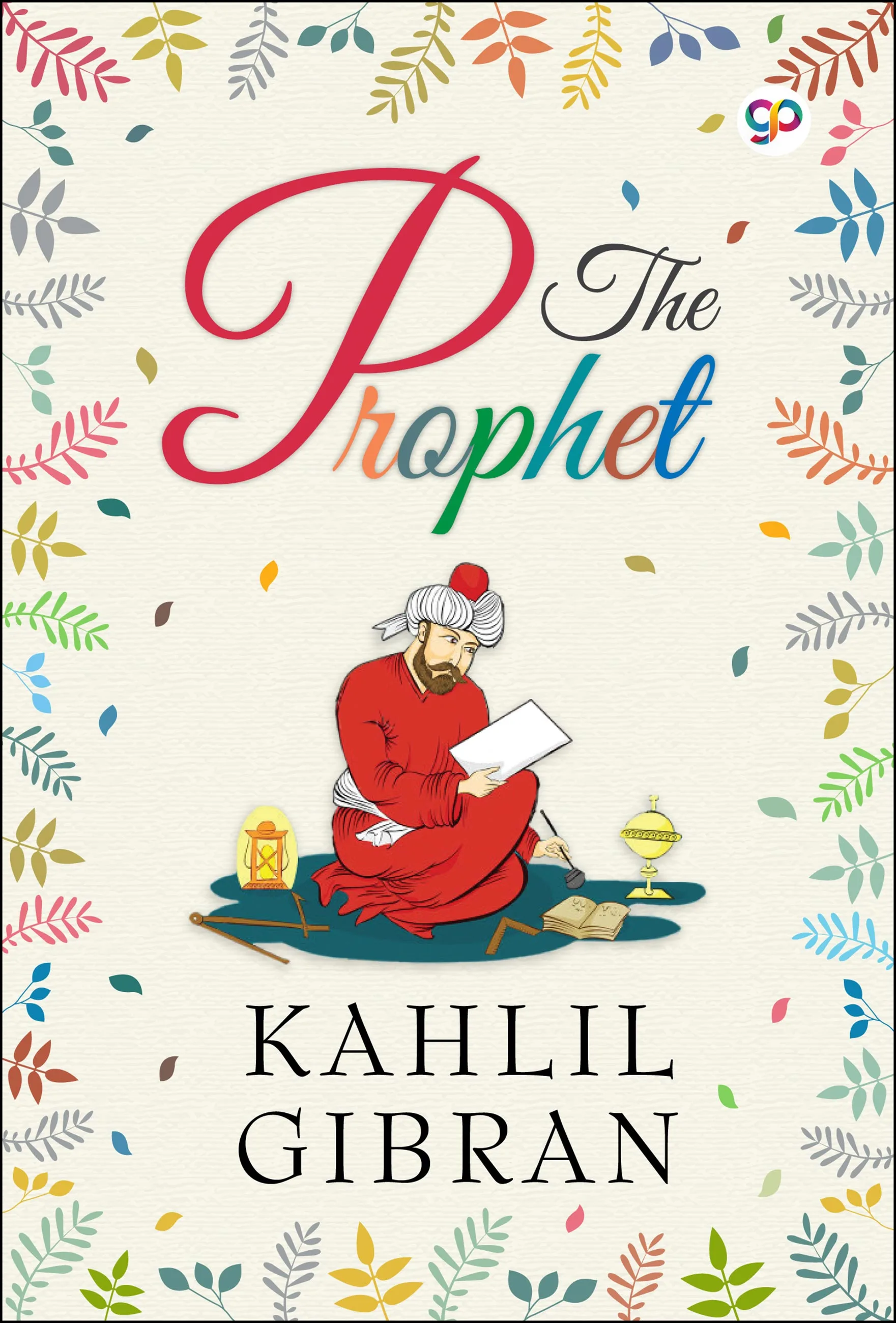
The Prophet
eBook
• 76 Pages
• INR 51.00
• English
• 9789387669741
No ratings yet
| Publisher | General Press |
|---|---|
| ISBN13 | 9789387669741 |
| ASIN/SKU | B07D9W9LHB |
| Book Format | eBook |
| Language | English |
| Pages | 76 |
| List Price | INR 51.00 |
| Subject Code | POE013000, POE003000, PHI015000 |
| Publishing Date | 25/05/2018 |
| Book Code | BD00068452 |
Buy this Book
Amazon Stores
Ebook Stores
Other Stores
Discover The Prophet by Kahlil Gibran. This book is published by General Press in eBook format, ISBN 9789387669741, ASIN B07D9W9LHB, under Literature and Fiction, Middle Eastern Poetry, Religious Philosophy.
Book Description
Kahlil Gibran’s 'The Prophet' is a timeless masterpiece of poetic philosophy that explores the deepest currents of the human experience. The narrative unfolds simply: Almustafa, a wise visionary who has lived in the coastal city of Orphalese for twelve years, is finally preparing to board a ship to return to his homeland. As he waits for his vessel, the townspeople gather around him, reluctant to let him go. They ask him to share his final insights on the mysteries of life.
What follows is a series of twenty-six profound homilies covering the entire spectrum of human existence. The people ask him about love, marriage, work, joy, sorrow, and death. Almustafa responds with breathtaking clarity and deep compassion. He teaches that love must be free to breathe, that children belong to life itself rather than their parents, and that joy and sorrow are inseparable companions—one carving out the space in our hearts that the other fills.
Written in luminous, lyrical prose, Gibran’s work transcends traditional religious dogma to offer a gentle, universal spirituality. It is a book that speaks directly to the soul, acknowledging our shared vulnerabilities and longings. 'The Prophet' remains an enduring source of comfort and inspiration, reminding us that everyday actions, when performed with love, are sacred, and that our shared humanity binds us together in a beautiful, eternal tapestry of existence.
What follows is a series of twenty-six profound homilies covering the entire spectrum of human existence. The people ask him about love, marriage, work, joy, sorrow, and death. Almustafa responds with breathtaking clarity and deep compassion. He teaches that love must be free to breathe, that children belong to life itself rather than their parents, and that joy and sorrow are inseparable companions—one carving out the space in our hearts that the other fills.
Written in luminous, lyrical prose, Gibran’s work transcends traditional religious dogma to offer a gentle, universal spirituality. It is a book that speaks directly to the soul, acknowledging our shared vulnerabilities and longings. 'The Prophet' remains an enduring source of comfort and inspiration, reminding us that everyday actions, when performed with love, are sacred, and that our shared humanity binds us together in a beautiful, eternal tapestry of existence.
Author Biography
Born in 1883 in the mountainous village of Bsharri in modern-day Lebanon, then part of the Ottoman Empire, Kahlil Gibran experienced a childhood marked by poverty and a lack of formal education. Seeking a better life, his mother immigrated to the United States in 1895, settling the family in the South End of Boston. It was there that Gibran's innate artistic talents were first recognized by a progressive settlement house, introducing the young immigrant to the local avant-garde art scene and setting him on a lifelong creative path.
To preserve his cultural heritage, Gibran returned to Lebanon in 1898 for several years of formal schooling. He traveled back to Boston in 1902 amidst a series of severe family tragedies, losing a brother, a sister, and his mother to illness in rapid succession. Despite his profound grief, he began to establish himself as both a painter and an Arabic-language writer. His trajectory shifted significantly when he met Mary Haskell, a school headmistress who became his lifelong benefactor, funding his art studies in Paris and heavily editing his later English writings.
Relocating to New York City in 1911, Gibran immersed himself in the local literary community and began to transition from writing exclusively in Arabic to publishing in English. His unique synthesis of Eastern mysticism, romanticism, and Western literary styles culminated in his 1923 masterpiece, The Prophet. This brief but deeply moving collection of poetic essays, exploring universal human themes such as love, joy, sorrow, and work, resonated profoundly with readers. Although it initially received a lukewarm reception from critics, it quickly found massive word-of-mouth success.
Over the following decades, The Prophet achieved phenomenal international popularity, cementing Gibran as one of the best-selling poets in history. He spent his final years continuing to write and paint, though he struggled with declining health and severe alcoholism. Gibran died in New York in 1931 at the age of forty-eight from cirrhosis of the liver and tuberculosis. Fulfilling his final wishes, his remains were returned to his hometown in Lebanon, where he is celebrated as a national hero and an enduring symbol of spiritual and literary bridge-building between the East and West.
To preserve his cultural heritage, Gibran returned to Lebanon in 1898 for several years of formal schooling. He traveled back to Boston in 1902 amidst a series of severe family tragedies, losing a brother, a sister, and his mother to illness in rapid succession. Despite his profound grief, he began to establish himself as both a painter and an Arabic-language writer. His trajectory shifted significantly when he met Mary Haskell, a school headmistress who became his lifelong benefactor, funding his art studies in Paris and heavily editing his later English writings.
Relocating to New York City in 1911, Gibran immersed himself in the local literary community and began to transition from writing exclusively in Arabic to publishing in English. His unique synthesis of Eastern mysticism, romanticism, and Western literary styles culminated in his 1923 masterpiece, The Prophet. This brief but deeply moving collection of poetic essays, exploring universal human themes such as love, joy, sorrow, and work, resonated profoundly with readers. Although it initially received a lukewarm reception from critics, it quickly found massive word-of-mouth success.
Over the following decades, The Prophet achieved phenomenal international popularity, cementing Gibran as one of the best-selling poets in history. He spent his final years continuing to write and paint, though he struggled with declining health and severe alcoholism. Gibran died in New York in 1931 at the age of forty-eight from cirrhosis of the liver and tuberculosis. Fulfilling his final wishes, his remains were returned to his hometown in Lebanon, where he is celebrated as a national hero and an enduring symbol of spiritual and literary bridge-building between the East and West.
Editorial Reviews
Editorial Reviews will be added soon…
Book Summary
Kahlil Gibran's "The Prophet" is a timeless work of philosophical fiction that blends poetry, spirituality, and wisdom into a deeply reflective narrative. First published in 1923, the book follows Almustafa, a revered prophet who has spent twelve years living in the city of Orphalese. As the story begins, he learns that the ship which will carry him back to his homeland has finally arrived. Before his departure, the people of the city gather around him, reluctant to let him go without sharing the wisdom he has quietly embodied during his years among them. They ask him questions about life's greatest concerns, hoping to preserve his teachings long after he has sailed away. What follows is not a conventional story driven by action, but a series of profound conversations that explore the deepest aspects of human existence.
The first themes Almustafa addresses revolve around love, marriage, children, and giving. His words present love as both a joyful and painful force that transforms those who embrace it completely. He explains that true love demands courage because it can bring both delight and suffering, yet both experiences are essential for personal growth. Speaking about marriage, he encourages couples to remain united while also preserving their individuality, comparing them to the pillars of a temple that stand apart while supporting the same structure. On the subject of children, he reminds parents that children are not possessions but independent souls who belong to the future rather than the past. They may receive love and guidance from their parents, but they must be free to develop according to their own destinies. When discussing generosity, he teaches that genuine giving comes not merely from wealth but from offering oneself with compassion and sincerity.
The conversation gradually shifts toward work, joy, sorrow, and freedom. Almustafa describes work as an expression of love made visible, suggesting that labor gains meaning when it serves others rather than simply providing material rewards. He rejects the idea that work is a burden, explaining instead that meaningful effort allows individuals to participate in the larger rhythm of life. Joy and sorrow, he says, cannot be separated because one gives depth to the other. The greater one's capacity for sorrow, the greater one's ability to appreciate happiness. This balance reflects the natural cycles that shape every human life. Regarding freedom, he gently challenges the common belief that freedom means escaping all responsibilities. Instead, he argues that true freedom comes from overcoming the invisible chains of fear, greed, pride, and attachment that imprison the human spirit.
As more citizens step forward with questions, Almustafa reflects on reason, passion, pain, and self-knowledge. Rather than viewing reason and emotion as opposing forces, he believes they should work together harmoniously, much like the sails and rudder of a ship guiding a voyage. Pain, although often feared, is described as a teacher that reveals hidden truths about oneself. Just as a seed must break open before it can grow into a tree, human beings often experience suffering before discovering wisdom and inner strength. He urges listeners not to avoid hardship but to understand its role in shaping character. Self-knowledge, according to Almustafa, cannot simply be taught by others. Each person must undertake the inward journey of discovering who they truly are through reflection, experience, and honest living.
The prophet then turns to themes concerning friendship, conversation, time, and the nature of good and evil. Friendship is portrayed as a relationship built on trust, honesty, and mutual joy rather than neediness or dependence. Friends enrich one another's lives not because they complete each other, but because they freely choose to share their lives together. In discussing speech, he advises people to speak only when words carry genuine meaning, since silence often expresses truth more powerfully than empty conversation. Time, he explains, is an illusion created by the human mind, while the soul exists beyond the limitations of past, present, and future. When addressing good and evil, he refuses to divide humanity into separate categories. Instead, he suggests that evil is often goodness that has become lost or wounded, emphasizing compassion and understanding over harsh judgment.
Questions about religion, prayer, pleasure, beauty, and death allow Almustafa to explore humanity's spiritual longings. He teaches that religion is not confined to rituals or institutions but is woven into every action performed with sincerity and love. Daily life itself becomes an act of worship when approached with mindfulness. Prayer, he explains, should not consist solely of asking for favors but should be an expression of gratitude and a way of opening one's heart to the divine. Pleasure is presented not as something sinful but as a natural gift that should be enjoyed wisely without allowing it to become an obsession. Beauty, meanwhile, is described as something that cannot be fully defined because it exists wherever the human soul encounters truth, kindness, and wonder. Finally, Almustafa speaks of death with remarkable serenity, portraying it not as an ending but as another stage in the eternal journey of life. Just as rivers eventually merge with the sea, every soul returns to a greater reality beyond earthly existence.
Throughout these teachings, Gibran repeatedly emphasizes the interconnectedness of all human experiences. Opposites such as happiness and sadness, strength and weakness, freedom and responsibility are shown not as contradictions but as complementary aspects of existence. His philosophy encourages readers to embrace life's uncertainties instead of resisting them. Every challenge contains the possibility of growth, every loss opens space for new understanding, and every relationship offers opportunities for deeper compassion. Rather than prescribing strict moral rules, Almustafa inspires individuals to cultivate awareness, kindness, humility, and inner balance. His reflections remain intentionally open-ended, allowing each reader to discover personal meaning within the poetic language.
As the conversations draw to a close, the people of Orphalese recognize that Almustafa's departure is inevitable. Although saddened by the thought of losing him, they understand that his teachings will remain alive in their memories and daily lives. The prophet reassures them that absence does not erase connection. Wisdom, once awakened within the heart, continues to grow even after the teacher has gone. He encourages them to trust themselves, reminding them that the truths they have heard are already present within their own souls, waiting to be discovered through experience and reflection. His farewell is gentle and hopeful rather than sorrowful, reinforcing the idea that endings often become the beginning of deeper understanding.
When Almustafa finally boards the waiting ship, he gazes one last time at the people and the city he has come to love. As the vessel sails away, the citizens remain on the shore, silently absorbing the significance of everything they have heard. There is no dramatic conclusion or final revelation because the book's true ending lies in the reader's own contemplation. The Prophet leaves behind a collection of enduring reflections on love, work, family, faith, freedom, and mortality, inviting each generation to revisit its pages and find new meaning. Nearly a century after its publication, Gibran's masterpiece continues to resonate across cultures because it speaks not to a particular religion or philosophy but to the universal human search for purpose, compassion, and inner peace. Its lyrical wisdom reminds readers that life's greatest truths are often found not in certainty but in the willingness to embrace the mystery of existence with an open heart.
The first themes Almustafa addresses revolve around love, marriage, children, and giving. His words present love as both a joyful and painful force that transforms those who embrace it completely. He explains that true love demands courage because it can bring both delight and suffering, yet both experiences are essential for personal growth. Speaking about marriage, he encourages couples to remain united while also preserving their individuality, comparing them to the pillars of a temple that stand apart while supporting the same structure. On the subject of children, he reminds parents that children are not possessions but independent souls who belong to the future rather than the past. They may receive love and guidance from their parents, but they must be free to develop according to their own destinies. When discussing generosity, he teaches that genuine giving comes not merely from wealth but from offering oneself with compassion and sincerity.
The conversation gradually shifts toward work, joy, sorrow, and freedom. Almustafa describes work as an expression of love made visible, suggesting that labor gains meaning when it serves others rather than simply providing material rewards. He rejects the idea that work is a burden, explaining instead that meaningful effort allows individuals to participate in the larger rhythm of life. Joy and sorrow, he says, cannot be separated because one gives depth to the other. The greater one's capacity for sorrow, the greater one's ability to appreciate happiness. This balance reflects the natural cycles that shape every human life. Regarding freedom, he gently challenges the common belief that freedom means escaping all responsibilities. Instead, he argues that true freedom comes from overcoming the invisible chains of fear, greed, pride, and attachment that imprison the human spirit.
As more citizens step forward with questions, Almustafa reflects on reason, passion, pain, and self-knowledge. Rather than viewing reason and emotion as opposing forces, he believes they should work together harmoniously, much like the sails and rudder of a ship guiding a voyage. Pain, although often feared, is described as a teacher that reveals hidden truths about oneself. Just as a seed must break open before it can grow into a tree, human beings often experience suffering before discovering wisdom and inner strength. He urges listeners not to avoid hardship but to understand its role in shaping character. Self-knowledge, according to Almustafa, cannot simply be taught by others. Each person must undertake the inward journey of discovering who they truly are through reflection, experience, and honest living.
The prophet then turns to themes concerning friendship, conversation, time, and the nature of good and evil. Friendship is portrayed as a relationship built on trust, honesty, and mutual joy rather than neediness or dependence. Friends enrich one another's lives not because they complete each other, but because they freely choose to share their lives together. In discussing speech, he advises people to speak only when words carry genuine meaning, since silence often expresses truth more powerfully than empty conversation. Time, he explains, is an illusion created by the human mind, while the soul exists beyond the limitations of past, present, and future. When addressing good and evil, he refuses to divide humanity into separate categories. Instead, he suggests that evil is often goodness that has become lost or wounded, emphasizing compassion and understanding over harsh judgment.
Questions about religion, prayer, pleasure, beauty, and death allow Almustafa to explore humanity's spiritual longings. He teaches that religion is not confined to rituals or institutions but is woven into every action performed with sincerity and love. Daily life itself becomes an act of worship when approached with mindfulness. Prayer, he explains, should not consist solely of asking for favors but should be an expression of gratitude and a way of opening one's heart to the divine. Pleasure is presented not as something sinful but as a natural gift that should be enjoyed wisely without allowing it to become an obsession. Beauty, meanwhile, is described as something that cannot be fully defined because it exists wherever the human soul encounters truth, kindness, and wonder. Finally, Almustafa speaks of death with remarkable serenity, portraying it not as an ending but as another stage in the eternal journey of life. Just as rivers eventually merge with the sea, every soul returns to a greater reality beyond earthly existence.
Throughout these teachings, Gibran repeatedly emphasizes the interconnectedness of all human experiences. Opposites such as happiness and sadness, strength and weakness, freedom and responsibility are shown not as contradictions but as complementary aspects of existence. His philosophy encourages readers to embrace life's uncertainties instead of resisting them. Every challenge contains the possibility of growth, every loss opens space for new understanding, and every relationship offers opportunities for deeper compassion. Rather than prescribing strict moral rules, Almustafa inspires individuals to cultivate awareness, kindness, humility, and inner balance. His reflections remain intentionally open-ended, allowing each reader to discover personal meaning within the poetic language.
As the conversations draw to a close, the people of Orphalese recognize that Almustafa's departure is inevitable. Although saddened by the thought of losing him, they understand that his teachings will remain alive in their memories and daily lives. The prophet reassures them that absence does not erase connection. Wisdom, once awakened within the heart, continues to grow even after the teacher has gone. He encourages them to trust themselves, reminding them that the truths they have heard are already present within their own souls, waiting to be discovered through experience and reflection. His farewell is gentle and hopeful rather than sorrowful, reinforcing the idea that endings often become the beginning of deeper understanding.
When Almustafa finally boards the waiting ship, he gazes one last time at the people and the city he has come to love. As the vessel sails away, the citizens remain on the shore, silently absorbing the significance of everything they have heard. There is no dramatic conclusion or final revelation because the book's true ending lies in the reader's own contemplation. The Prophet leaves behind a collection of enduring reflections on love, work, family, faith, freedom, and mortality, inviting each generation to revisit its pages and find new meaning. Nearly a century after its publication, Gibran's masterpiece continues to resonate across cultures because it speaks not to a particular religion or philosophy but to the universal human search for purpose, compassion, and inner peace. Its lyrical wisdom reminds readers that life's greatest truths are often found not in certainty but in the willingness to embrace the mystery of existence with an open heart.
Sample Chapters
1. The Coming of the Ship
Almustafa, the chosen and the beloved, who was a dawn unto his own day, had waited twelve years in the city of Orphalese for his ship that was to return and bear him back to the isle of his birth.
And in the twelfth year, on the seventh day of Ielool, the month of reaping, he climbed the hill without the city walls and looked seaward; and he beheld his ship coming with the mist.
Then the gates of his heart were flung open, and his joy flew far over the sea. And he closed his eyes and prayed in the silences of his soul.
But as he descended the hill, a sadness came upon him, and he thought in his heart:
How shall I go in peace and without sorrow? Nay, not without a wound in the spirit shall I leave this city.
Long were the days of pain I have spent within its walls, and long were the nights of aloneness; and who can depart from his pain and his aloneness without regret?
Too many fragments of the spirit have I scattered in these streets, and too many are the children of my longing that walk naked among these hills, and I cannot withdraw from them without a burden and an ache.
It is not a garment I cast off this day, but a skin that I tear with my own hands.
Nor is it a thought I leave behind me, but a heart made sweet with hunger and with thirst.
Yet I cannot tarry longer.
The sea that calls all things unto her calls me, and I must embark.
For to stay, though the hours burn in the night, is to freeze and crystallize and be bound in a mould.
Fain would I take with me all that is here. But how shall I?
A voice cannot carry the tongue and the lips that gave it wings. Alone must it seek the ether.
And alone and without his nest shall the eagle fly across the sun.
Now when he reached the foot of the hill, he turned again towards the sea, and he saw his ship approaching the harbour, and upon her prow the mariners, the men of his own land.
And his soul cried out to them, and he said:
Sons of my ancient mother, you riders of the tides,
How often have you sailed in my dreams. And now you come in my awakening, which is my deeper dream.
Ready am I to go, and my eagerness with sails full set awaits the wind.
Only another breath will I breathe in this still air, only another loving look cast backward,
And then I shall stand among you, a seafarer among seafarers.
And you, vast sea, sleeping mother,
Who alone are peace and freedom to the river and the stream,
Only another winding will this stream make, only another murmur in this glade,
And then I shall come to you, a boundless drop to a boundless ocean.
And as he walked he saw from afar men and women leaving their fields and their vineyards and hastening towards the city gates.
And he heard their voices calling his name, and shouting from field to field telling one another of the coming of his ship.
And he said to himself:
Shall the day of parting be the day of gathering?
And shall it be said that my eve was in truth my dawn?
And what shall I give unto him who has left his plough in midfurrow, or to him who has stopped the wheel of his winepress?
Shall my heart become a tree heavy-laden with fruit that I may gather and give unto them?
And shall my desires flow like a fountain that I may fill their cups?
Am I a harp that the hand of the mighty may touch me, or a flute that his breath may pass through me?
A seeker of silences am I, and what treasure have I found in silences that I may dispense with confidence?
If this is my day of harvest, in what fields have I sowed the seed, and in what unremembered seasons?
If this indeed be the hour in which I lift up my lantern, it is not my flame that shall burn therein.
Empty and dark shall I raise my lantern,
And the guardian of the night shall fill it with oil and he shall light it also.
These things he said in words. But much in his heart remained unsaid. For he himself could not speak his deeper secret.
And when he entered into the city all the people came to meet him, and they were crying out to him as with one voice.
And the elders of the city stood forth and said:
Go not yet away from us.
A noontide have you been in our twilight, and your youth has given us dreams to dream.
No stranger are you among us, nor a guest, but our son and our dearly beloved.
Suffer not yet our eyes to hunger for your face.
And the priests and the priestess said unto him:
Let not the waves of the sea separate us now, and the years you have spent in our midst become a memory.
You have walked among us a spirit, and your shadow has been a light upon our faces.
Much have we loved you. But speechless was our love, and with veils has it been veiled.
Yet now it cries aloud unto you, and would stand revealed before you.
And ever has it been that love knows not its own depth until the hour of separation.
And others came also and entreated him. But he answered them not. He only bent his head; and those who stood near saw his tears falling upon his breast.
And he and the people proceeded towards the great square before the temple.
And there came out of the sanctuary a woman whose name was Almitra. And she was a seeress.
And he looked upon her with exceeding tenderness, for it was she who had first sought and believed in him when he had been but a day in their city.
And she hailed him, saying:
Prophet of God, in quest for the uttermost, long have you searched the distances for your ship.
And now your ship has come, and you must needs go.
Deep is your longing for the land of your memories and the dwelling-place of your greater desires; and our love would not bind you nor our needs hold you.
Yet this we ask ere you leave us, that you speak to us and give us of your truth.
And we will give it unto our children, and they unto their children, and it shall not perish.
In your aloneness you have watched with our days, and in your wakefulness you have listened to the weeping and the laughter of our sleep.
Now, therefore, disclose us to ourselves, and tell us all that has been shown you of that which is between birth and death.
And he answered:
People of Orphalese, of what can I speak save of that which is even now moving within your souls?
2. Love
Then said Almitra, “Speak to us of Love.”
And he raised his head and looked upon the people, and there fell a stillness upon them. And with a great voice he said:
When love beckons to you, follow him,
Though his ways are hard and steep.
And when his wings enfold you yield to him,
Though the sword hidden among his pinions may wound you.
And when he speaks to you believe in him,
Though his voice may shatter your dreams as the north wind lays waste the garden.
For even as love crowns you so shall he crucify you. Even as he is for your growth so is he for your pruning.
Even as he ascends to your height and caresses your tenderest branches that quiver in the sun,
So shall he descend to your roots and shake them in their clinging to the earth.
Like sheaves of corn he gathers you unto himself.
He threshes you to make you naked.
He sifts you to free you from your husks.
He grinds you to whiteness.
He kneads you until you are pliant;
And then he assigns you to his sacred fire, that you may become sacred bread for God’s sacred feast.
All these things shall love do unto you that you may know the secrets of your heart, and in that knowledge become a fragment of Life’s heart.
But if in your fear you would seek only love’s peace and love’s pleasure.
Then it is better for you that you cover your nakedness and pass out of love’s threshing-floor,
Into the seasonless world where you shall laugh, but not all of your laughter, and weep, but not all of your tears.
Love gives naught but itself and takes naught but from itself.
Love possesses not nor would it be possessed;
For love is sufficient unto love.
When you love you should not say, “God is in my heart,” but rather, “I am in the heart of God.”
And think not you can direct the course of love, for love, if it finds you worthy, directs your course.
Love has no other desire but to fulfil itself.
But if you love and must needs have desires, let these be your desires:
To melt and be like a running brook that sings its melody to the night.
To know the pain of too much tenderness.
To be wounded by your own understanding of love;
And to bleed willingly and joyfully.
To wake at dawn with a winged heart and give thanks for another day of loving;
To rest at the noon hour and meditate love’s ecstasy;
To return home at eventide with gratitude;
And then to sleep with a prayer for the beloved in your heart and a song of praise upon your lips.
3. Marriage
Then Almitra spoke again and said, “And what of Marriage, master?”
And he answered saying:
You were born together, and together you shall be for evermore.
You shall be together when the white wings of death scatter your days.
Aye, you shall be together even in the silent memory of God.
But let there be spaces in your togetherness,
And let the winds of the heavens dance between you.
Love one another, but make not a bond of love:
Let it rather be a moving sea between the shores of your souls.
Fill each other’s cup but drink not from one cup.
Give one another of your bread but eat not from the same loaf.
Sing and dance together and be joyous, but let each one of you be alone,
Even as the strings of a lute are alone though they quiver with the same music.
Give your hearts, but not into each other’s keeping.
For only the hand of Life can contain your hearts.
Almustafa, the chosen and the beloved, who was a dawn unto his own day, had waited twelve years in the city of Orphalese for his ship that was to return and bear him back to the isle of his birth.
And in the twelfth year, on the seventh day of Ielool, the month of reaping, he climbed the hill without the city walls and looked seaward; and he beheld his ship coming with the mist.
Then the gates of his heart were flung open, and his joy flew far over the sea. And he closed his eyes and prayed in the silences of his soul.
But as he descended the hill, a sadness came upon him, and he thought in his heart:
How shall I go in peace and without sorrow? Nay, not without a wound in the spirit shall I leave this city.
Long were the days of pain I have spent within its walls, and long were the nights of aloneness; and who can depart from his pain and his aloneness without regret?
Too many fragments of the spirit have I scattered in these streets, and too many are the children of my longing that walk naked among these hills, and I cannot withdraw from them without a burden and an ache.
It is not a garment I cast off this day, but a skin that I tear with my own hands.
Nor is it a thought I leave behind me, but a heart made sweet with hunger and with thirst.
Yet I cannot tarry longer.
The sea that calls all things unto her calls me, and I must embark.
For to stay, though the hours burn in the night, is to freeze and crystallize and be bound in a mould.
Fain would I take with me all that is here. But how shall I?
A voice cannot carry the tongue and the lips that gave it wings. Alone must it seek the ether.
And alone and without his nest shall the eagle fly across the sun.
Now when he reached the foot of the hill, he turned again towards the sea, and he saw his ship approaching the harbour, and upon her prow the mariners, the men of his own land.
And his soul cried out to them, and he said:
Sons of my ancient mother, you riders of the tides,
How often have you sailed in my dreams. And now you come in my awakening, which is my deeper dream.
Ready am I to go, and my eagerness with sails full set awaits the wind.
Only another breath will I breathe in this still air, only another loving look cast backward,
And then I shall stand among you, a seafarer among seafarers.
And you, vast sea, sleeping mother,
Who alone are peace and freedom to the river and the stream,
Only another winding will this stream make, only another murmur in this glade,
And then I shall come to you, a boundless drop to a boundless ocean.
And as he walked he saw from afar men and women leaving their fields and their vineyards and hastening towards the city gates.
And he heard their voices calling his name, and shouting from field to field telling one another of the coming of his ship.
And he said to himself:
Shall the day of parting be the day of gathering?
And shall it be said that my eve was in truth my dawn?
And what shall I give unto him who has left his plough in midfurrow, or to him who has stopped the wheel of his winepress?
Shall my heart become a tree heavy-laden with fruit that I may gather and give unto them?
And shall my desires flow like a fountain that I may fill their cups?
Am I a harp that the hand of the mighty may touch me, or a flute that his breath may pass through me?
A seeker of silences am I, and what treasure have I found in silences that I may dispense with confidence?
If this is my day of harvest, in what fields have I sowed the seed, and in what unremembered seasons?
If this indeed be the hour in which I lift up my lantern, it is not my flame that shall burn therein.
Empty and dark shall I raise my lantern,
And the guardian of the night shall fill it with oil and he shall light it also.
These things he said in words. But much in his heart remained unsaid. For he himself could not speak his deeper secret.
And when he entered into the city all the people came to meet him, and they were crying out to him as with one voice.
And the elders of the city stood forth and said:
Go not yet away from us.
A noontide have you been in our twilight, and your youth has given us dreams to dream.
No stranger are you among us, nor a guest, but our son and our dearly beloved.
Suffer not yet our eyes to hunger for your face.
And the priests and the priestess said unto him:
Let not the waves of the sea separate us now, and the years you have spent in our midst become a memory.
You have walked among us a spirit, and your shadow has been a light upon our faces.
Much have we loved you. But speechless was our love, and with veils has it been veiled.
Yet now it cries aloud unto you, and would stand revealed before you.
And ever has it been that love knows not its own depth until the hour of separation.
And others came also and entreated him. But he answered them not. He only bent his head; and those who stood near saw his tears falling upon his breast.
And he and the people proceeded towards the great square before the temple.
And there came out of the sanctuary a woman whose name was Almitra. And she was a seeress.
And he looked upon her with exceeding tenderness, for it was she who had first sought and believed in him when he had been but a day in their city.
And she hailed him, saying:
Prophet of God, in quest for the uttermost, long have you searched the distances for your ship.
And now your ship has come, and you must needs go.
Deep is your longing for the land of your memories and the dwelling-place of your greater desires; and our love would not bind you nor our needs hold you.
Yet this we ask ere you leave us, that you speak to us and give us of your truth.
And we will give it unto our children, and they unto their children, and it shall not perish.
In your aloneness you have watched with our days, and in your wakefulness you have listened to the weeping and the laughter of our sleep.
Now, therefore, disclose us to ourselves, and tell us all that has been shown you of that which is between birth and death.
And he answered:
People of Orphalese, of what can I speak save of that which is even now moving within your souls?
2. Love
Then said Almitra, “Speak to us of Love.”
And he raised his head and looked upon the people, and there fell a stillness upon them. And with a great voice he said:
When love beckons to you, follow him,
Though his ways are hard and steep.
And when his wings enfold you yield to him,
Though the sword hidden among his pinions may wound you.
And when he speaks to you believe in him,
Though his voice may shatter your dreams as the north wind lays waste the garden.
For even as love crowns you so shall he crucify you. Even as he is for your growth so is he for your pruning.
Even as he ascends to your height and caresses your tenderest branches that quiver in the sun,
So shall he descend to your roots and shake them in their clinging to the earth.
Like sheaves of corn he gathers you unto himself.
He threshes you to make you naked.
He sifts you to free you from your husks.
He grinds you to whiteness.
He kneads you until you are pliant;
And then he assigns you to his sacred fire, that you may become sacred bread for God’s sacred feast.
All these things shall love do unto you that you may know the secrets of your heart, and in that knowledge become a fragment of Life’s heart.
But if in your fear you would seek only love’s peace and love’s pleasure.
Then it is better for you that you cover your nakedness and pass out of love’s threshing-floor,
Into the seasonless world where you shall laugh, but not all of your laughter, and weep, but not all of your tears.
Love gives naught but itself and takes naught but from itself.
Love possesses not nor would it be possessed;
For love is sufficient unto love.
When you love you should not say, “God is in my heart,” but rather, “I am in the heart of God.”
And think not you can direct the course of love, for love, if it finds you worthy, directs your course.
Love has no other desire but to fulfil itself.
But if you love and must needs have desires, let these be your desires:
To melt and be like a running brook that sings its melody to the night.
To know the pain of too much tenderness.
To be wounded by your own understanding of love;
And to bleed willingly and joyfully.
To wake at dawn with a winged heart and give thanks for another day of loving;
To rest at the noon hour and meditate love’s ecstasy;
To return home at eventide with gratitude;
And then to sleep with a prayer for the beloved in your heart and a song of praise upon your lips.
3. Marriage
Then Almitra spoke again and said, “And what of Marriage, master?”
And he answered saying:
You were born together, and together you shall be for evermore.
You shall be together when the white wings of death scatter your days.
Aye, you shall be together even in the silent memory of God.
But let there be spaces in your togetherness,
And let the winds of the heavens dance between you.
Love one another, but make not a bond of love:
Let it rather be a moving sea between the shores of your souls.
Fill each other’s cup but drink not from one cup.
Give one another of your bread but eat not from the same loaf.
Sing and dance together and be joyous, but let each one of you be alone,
Even as the strings of a lute are alone though they quiver with the same music.
Give your hearts, but not into each other’s keeping.
For only the hand of Life can contain your hearts.
Reader Reviews
No reviews yet.
The Prophet