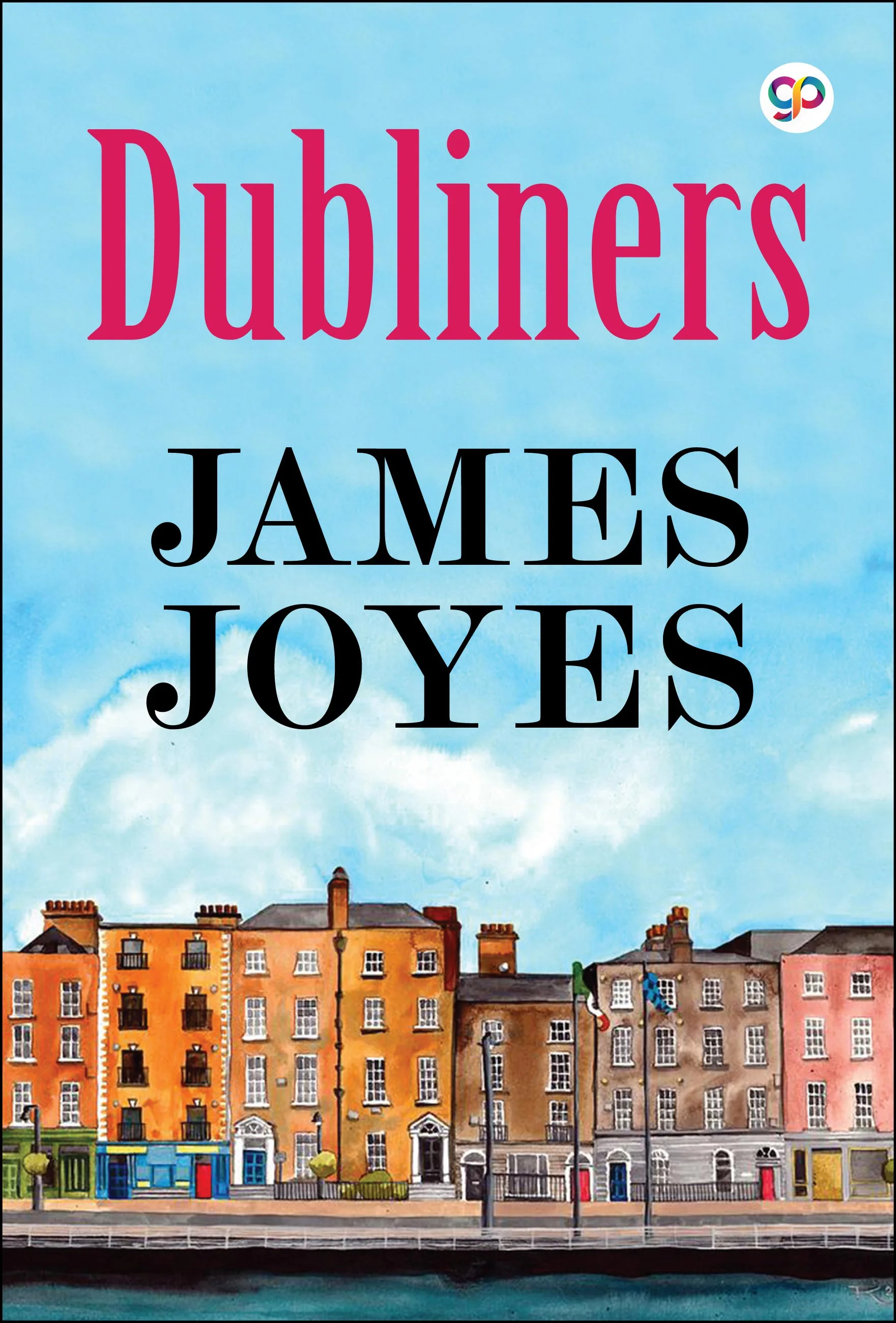
Dubliners
eBook
• INR 70.00
• English
• 9789388760034
No ratings yet
| Publisher | General Press |
|---|---|
| ISBN13 | 9789388760034 |
| ASIN/SKU | B07M9WQSS3 |
| Book Format | eBook |
| Language | English |
| List Price | INR 70.00 |
| Subject Code | FIC004000 |
| Publishing Date | 20/12/2018 |
| Book Code | BD00068529 |
Buy this Book
Amazon Stores
Ebook Stores
Other Stores
Discover Dubliners by James Joyce. This book is published by General Press in eBook format, ISBN 9789388760034, ASIN B07M9WQSS3, under Literature and Fiction, Classics.
Book Description
James Joyce's Dubliners is a collection of short stories depicting middle class life in Dublin in the early twentieth century. Each story centers around the moment of epiphany, when a character suddenly understands something about themselves or their life and surroundings that they didn't understand before. The protagonists of the stories progress as a life progresses: from children to adolescents, to adults and the elderly.
Author Biography
James Joyce (1882–1941) was an Irish novelist, poet, short-story writer, and literary modernist whose experimental approach to language and human consciousness transformed twentieth-century literature. Born on February 2, 1882, in Rathgar, Dublin, Joyce was the eldest of ten children in a family whose financial circumstances gradually declined. He received a strong Jesuit education at Clongowes Wood College and Belvedere College before studying modern languages at University College Dublin. From an early age, Joyce displayed an extraordinary talent for language and literature, developing interests that ranged from Dante and Aristotle to Henrik Ibsen and Thomas Aquinas.
After graduating in 1902, Joyce moved to Paris intending to study medicine, but financial difficulties and his growing commitment to literature changed his plans. He returned to Dublin in 1903 after his mother became seriously ill and died. In 1904, he met Nora Barnacle, who became his lifelong companion and later his wife. That same year, Joyce and Nora left Ireland, beginning a largely expatriate life in continental Europe. They lived in places including Pola, Trieste, Rome, Zurich, and Paris, while Joyce supported himself through teaching and writing. Although he lived abroad for most of his adult life, Dublin remained at the heart of nearly everything he wrote.
Joyce’s literary reputation began to grow with ‘Dubliners’, a collection of fifteen short stories finally published in 1914 after years of difficulty finding a publisher. The book presents ordinary Dublin life with remarkable psychological detail and explores themes of frustration, paralysis, family, religion, and lost opportunities. His semi-autobiographical novel ‘A Portrait of the Artist as a Young Man’ followed in 1916 and introduced Stephen Dedalus, a young artist struggling to escape the restrictions of family, religion, and nationalism. The novel established Joyce as an important voice of literary modernism.
Joyce’s greatest achievement was ‘Ulysses’, published in Paris in 1922. Set largely in Dublin on June 16, 1904—the day Joyce met Nora—the novel follows Leopold Bloom, Stephen Dedalus, and Molly Bloom through an ordinary day while transforming everyday experiences through mythology, interior monologue, parody, and constantly changing literary styles. Its innovative use of stream-of-consciousness and its frank treatment of sexuality made it controversial, but censorship battles eventually helped establish its importance in modern literature.
Joyce spent seventeen years developing ‘Finnegans Wake’, published in 1939. Even more experimental than ‘Ulysses’, the book uses dreamlike language, multilingual wordplay, invented expressions, and recurring myths to explore history, memory, and human experience. Joyce also suffered from severe eye problems for much of his later life, sometimes becoming nearly blind. He died in Zurich on January 13, 1941, following surgery.
Today, James Joyce is regarded as one of the most influential writers of the twentieth century. For readers searching for “James Joyce’s biography, ‘Ulysses’, ‘Dubliners’, ‘A Portrait of the Artist as a Young Man’, modernist literature, or stream-of-consciousness writing”, his career offers a remarkable story of artistic independence. Joyce transformed the ordinary details of life—conversation, memory, desire, wandering, and private thought—into ambitious literature, proving that an entire world could exist inside a single day and even inside a single human mind.
After graduating in 1902, Joyce moved to Paris intending to study medicine, but financial difficulties and his growing commitment to literature changed his plans. He returned to Dublin in 1903 after his mother became seriously ill and died. In 1904, he met Nora Barnacle, who became his lifelong companion and later his wife. That same year, Joyce and Nora left Ireland, beginning a largely expatriate life in continental Europe. They lived in places including Pola, Trieste, Rome, Zurich, and Paris, while Joyce supported himself through teaching and writing. Although he lived abroad for most of his adult life, Dublin remained at the heart of nearly everything he wrote.
Joyce’s literary reputation began to grow with ‘Dubliners’, a collection of fifteen short stories finally published in 1914 after years of difficulty finding a publisher. The book presents ordinary Dublin life with remarkable psychological detail and explores themes of frustration, paralysis, family, religion, and lost opportunities. His semi-autobiographical novel ‘A Portrait of the Artist as a Young Man’ followed in 1916 and introduced Stephen Dedalus, a young artist struggling to escape the restrictions of family, religion, and nationalism. The novel established Joyce as an important voice of literary modernism.
Joyce’s greatest achievement was ‘Ulysses’, published in Paris in 1922. Set largely in Dublin on June 16, 1904—the day Joyce met Nora—the novel follows Leopold Bloom, Stephen Dedalus, and Molly Bloom through an ordinary day while transforming everyday experiences through mythology, interior monologue, parody, and constantly changing literary styles. Its innovative use of stream-of-consciousness and its frank treatment of sexuality made it controversial, but censorship battles eventually helped establish its importance in modern literature.
Joyce spent seventeen years developing ‘Finnegans Wake’, published in 1939. Even more experimental than ‘Ulysses’, the book uses dreamlike language, multilingual wordplay, invented expressions, and recurring myths to explore history, memory, and human experience. Joyce also suffered from severe eye problems for much of his later life, sometimes becoming nearly blind. He died in Zurich on January 13, 1941, following surgery.
Today, James Joyce is regarded as one of the most influential writers of the twentieth century. For readers searching for “James Joyce’s biography, ‘Ulysses’, ‘Dubliners’, ‘A Portrait of the Artist as a Young Man’, modernist literature, or stream-of-consciousness writing”, his career offers a remarkable story of artistic independence. Joyce transformed the ordinary details of life—conversation, memory, desire, wandering, and private thought—into ambitious literature, proving that an entire world could exist inside a single day and even inside a single human mind.
Editorial Reviews
Editorial Reviews will be added soon…
Book Summary
Book Summary will be added soon…
Sample Chapters
Sample Chapters will be added soon…
Reader Reviews
No reviews yet.
Dubliners